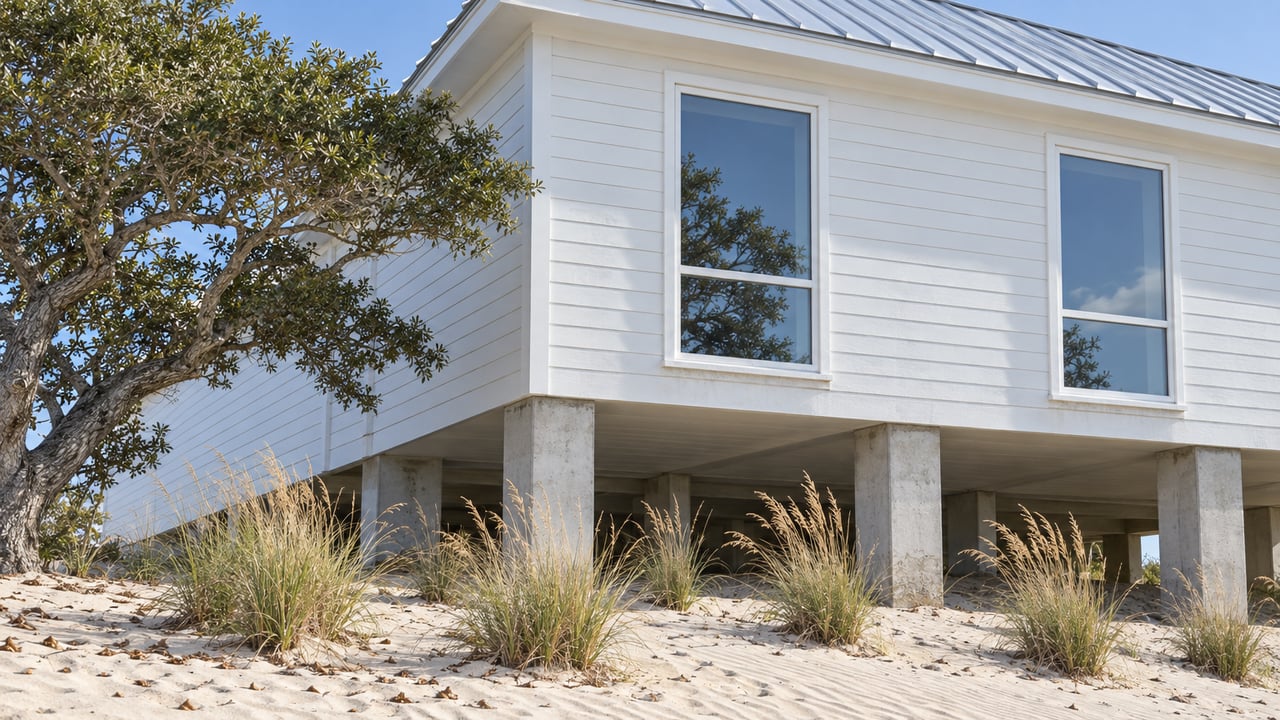
"The sand yesterday was all the way up to the boardwalk and now it's gone, you can walk right under it." That is how Grayton Beach local Leila Harris described the morning after Hurricane Isaias to WJHG NewsChannel 7. The same report described surge topping the dunes in Grayton and filling Western Lake. Neighbor Billy Buzzett told the station the lake, which usually drains into the Gulf, flowed the other way during the storm, and that the water carried a neighbor's dock about a quarter mile down the lake.
Isaias came ashore in Destin as a Category 2 storm on the night of October 9. Nearly four weeks later, a boardwalk standing over empty air is the most visible open question on a Gulf-front Grayton lot. The answer is more specific than most owners expect. Under the state's emergency order, a walkover that survived can be repaired, but its seaward end has to move landward. If you own, list or are under contract on a Gulf-front Grayton home this winter, the walkover you see is the one the rules allow.
The Order That Sets the Shape
Florida DEP signed Emergency Final Order OGC 26-2105 on October 8, 2026, the day before landfall. It covers 27 counties, Walton and Okaloosa among them. The language on walkovers is short. Repair of a surviving beach or dune walkover is authorized "provided the structure is substantially intact and the repair adjusts the seaward terminus of the walkover to a more landward location to accommodate changes in the shoreline topography and native salt-resistant vegetation patterns." Viewing platforms that are part of a walkover "may not be constructed on or seaward of the surviving or post-Storm rebuilt dune system or sandy beach."
So the post-storm beach sets the length of the walkover, not its old footprint. Where the surge pulled the dune back, the repaired structure has to stop short of where it used to end. The same section limits stairs, landings and similar minor structures to no larger than the originals.
Everything hinges on the condition of the structure:
| Walkover condition after Isaias | Path under the emergency order |
|---|---|
| Substantially intact | Repair with local-government authorization; seaward end moves landward |
| Viewing platform | Cannot sit on or seaward of the dune or sandy beach |
| Completely destroyed | Outside the surviving-walkover provision; DEP field authorization after a site inspection, or the otherwise applicable permits |
| Public walkover at a county access | Local-government work with its own one-year window |
A request for field authorization has to describe the work and include drawings, the location and the owner's contact details. The order says such authorizations generally cannot be issued unless they are requested before the order expires. That makes "substantially intact" the most consequential phrase on the lot. It separates a repair from a replacement, and each has its own process and deadline.
Two Clocks, Both Already Running
As written, the order lays out this sequence for private property:
- Local authorization first. A property owner seeking these repairs needs authorization from the local government, which in Grayton is Walton County.
- The county tells the state. The local government must notify DEP in writing within three working days of issuing the permit.
- No second DEP permit. Work done under the order's authorization does not need an additional DEP permit.
- A 90-day finish line. The work must be done within 90 days of the local permit or within 90 days after the order expires, whichever comes first.
The DEP order sets no end date of its own. It runs until the Governor's Executive Order 26-202, as amended by 26-211, expires or is rescinded, or longer if later orders extend it. Executive Order 26-202 was signed October 6, 2026, and by its own terms expires 60 days from that date unless extended, which on its original terms points to early December. An extension would move that date, so the deadline that counts is whatever the Governor's office has most recently set. The window is open now, and how long it stays open is decided in Tallahassee.
The season helps a little. The order requires Walton County work during marine turtle nesting season to be coordinated with the Florida Fish and Wildlife Conservation Commission, and it gives the coastal season as May 1 through October 31. It also requires protecting dune features, native salt-resistant vegetation and listed species, whatever the month. A repair started this November falls outside that nesting window. A repair still waiting on paperwork in May does not.
The Sand Rules Matter More Than the Lumber
A shortened walkover is a carpentry job. The dune it crosses is harder. The order allows a damaged dune to be restored only with "beach compatible sand from an upland source," similar to pre-storm sand in color and grain size and free of debris, rocks, clay and organic matter. No sand may come from the beach, the nearshore, or below mean high water seaward of the Coastal Construction Control Line without DEP's written authorization. Sand the storm pushed inland can go back on the dune if it is clean and does not bury storm or construction debris.
That is the part of the order that makes a Gulf-front owner's own lot the front line. The bigger public fix is on a much longer schedule.
Why the County's Fix Runs on a Different Calendar
Walton County Director of Beach Operations Josh Ervin told WJHG on October 17 that a federally funded beach renourishment project is being planned and that its design will likely be finished in October 2027. Meanwhile, the county met with FEMA about emergency dune repairs. "In areas where you have a nourished beach and have an ongoing maintenance period, there would be some eligibility there," Ervin said, adding that the county planned to take the question to the Board of County Commissioners through its coastal engineer, Taylor Engineering. The station said it had asked DEP whether the renourishment project would apply to private beaches and was still waiting for an answer.
The private-beach question is the mechanism under the whole story. Harris raised it herself in the WJHG Grayton report, asking what would happen with renourishment given the county's history with beach privatization. Until that question is answered, the federal timeline does not say whether a given stretch of Grayton sand is in or out.
The county's first post-storm meeting focused on cleanup. A Walton County release says commissioners met October 13, approved a contract amendment with DRC covering public beaches and debris removal from public and private neighborhoods, and extended the local emergency. Mid Bay News reported that Beach Operations called the damage at most public access points generally minimal. The emergency dune proposal was headed for a later meeting, and the county's meeting portal listed the next regular session for October 27. That portal is where the board's agendas and actions are recorded. The order also gives the county's own work, such as public walkover repair and dune restoration with compliant sand, a separate window, one year from the issuance of the Governor's order.
That gap in speed has already shown up in Grayton. Storm surge estimated at three to five feet took out the bridge into Grayton Beach State Park. With FDOT and DEP working through the night, crews rebuilt it in 16 hours, and the park reopened for day use at 8 a.m. Monday, WJHG reported. Public infrastructure on public land moved in hours. The dunes in front of private Gulf-front homes are on a timeline measured against a design due in late 2027.
What This Means for a Grayton Sale This Winter
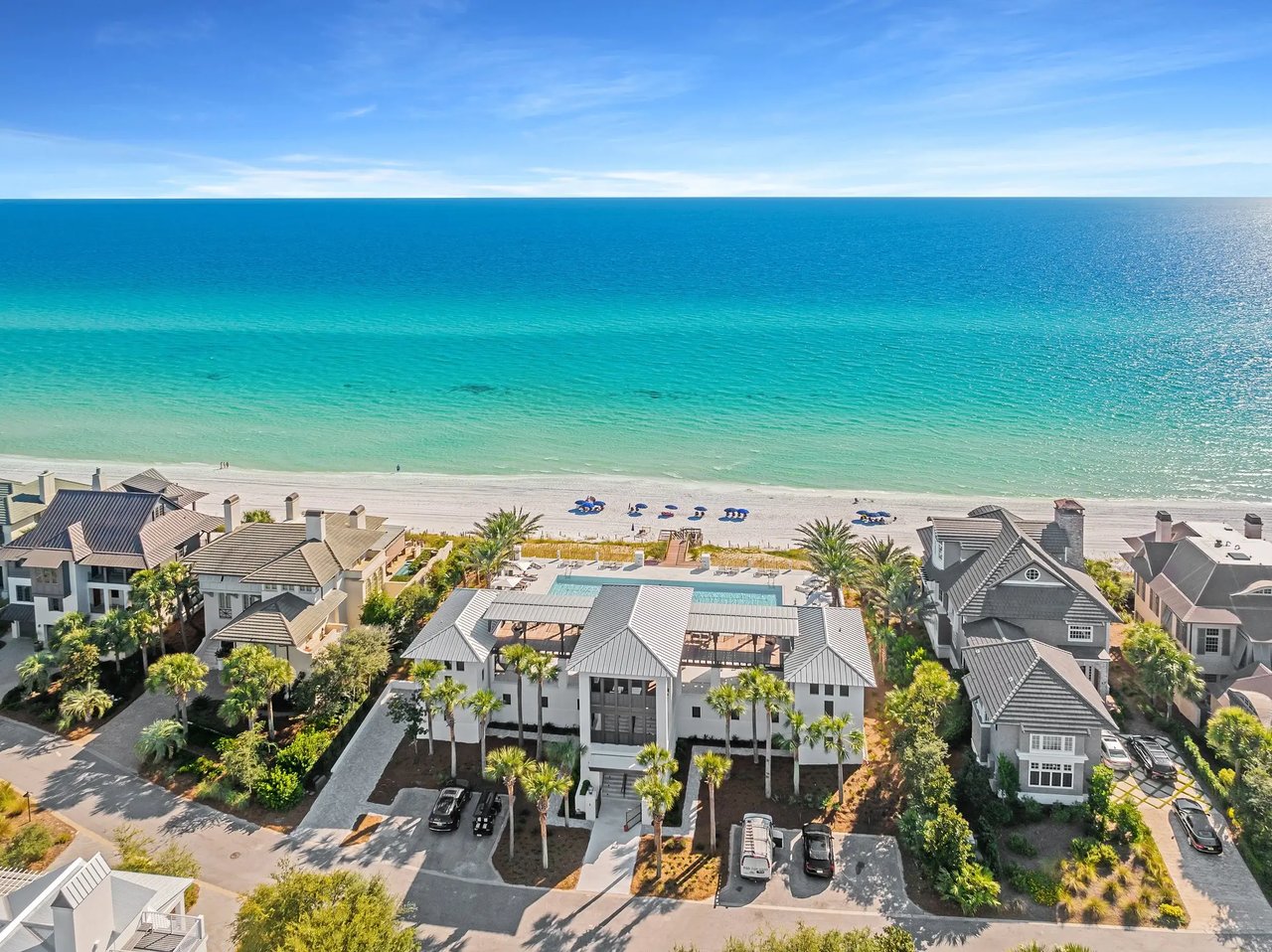
On a showing, a Gulf-front Grayton walkover now tells a buyer something about the paperwork behind it. SoWal's October 21 photo report includes the Grayton Dunes access behind the Red Bar among its South Walton galleries, and the Northwest Florida Daily News gallery shows the village the day after landfall. The images show the beach. They do not show which path a given structure is on.
These are the factual questions that separate one Gulf-front listing from the next right now:
- Did the walkover survive substantially intact, or is it a replacement under a field authorization?
- If it was repaired, did Walton County issue the local authorization, and when, given the 90-day completion window?
- Does the repaired walkover end farther landward than before, and where does any viewing platform sit relative to the rebuilt dune?
- Was the dune rebuilt with upland-source sand that meets the order's specifications, or with sand recovered from upland on the property?
- Does the parcel fall within any county emergency dune work or future renourishment area, a question that was still open for private beaches as of mid-October?
Owners who are holding rather than selling have the same clock. Locals interviewed by WJHG described planting sea oats and putting up sand fencing to help the dunes rebuild, and said they were confident the dunes would come back over time. The walkover over that rebuilt dune will still have to follow the order's rules on length and platform placement.
For more on the village itself, see our Grayton Beach neighborhood page and our earlier look at how the Hotz Avenue access reshaped the north end of Grayton.
Quick Answers
Can I rebuild my walkover exactly as it was? Under the order, a surviving walkover can be repaired only if it is substantially intact, and the repair must move its seaward end landward. Stairs and landings cannot exceed their original size.
What if the storm took the whole structure? A completely destroyed structure is outside the surviving-walkover provision. The order allows DEP field authorization after a site inspection, and requests generally have to be made before the order expires.
Will county renourishment rebuild the dune in front of a private lot? That was unresolved in mid-October. The federally funded design is expected around October 2027, and WJHG was still waiting for DEP's answer on private beaches.
This post summarizes the published order and local reporting. It is general information, not legal, insurance or financial advice. Every lot is different, so confirm your own situation with Walton County, DEP, and a real estate attorney or other licensed professional before you act.
If you own, are selling or are under contract on a Gulf-front home in Grayton and want to know how a post-Isaias walkover or dune repair fits into your timing, contact the CJB Group at Randy Carroll for a private consultation.